Our Home

Our Home

Saturday, June 18, 2016

Northern OIympic Peninsula

On June 10th we moved to the Escapees Evergreen Coho Park in Chimacum for the remainder of the month. This well managed SKP park, located on the northeast side of the Olympic Peninsula, is quiet and has an active community. This location gives us easy access to the north entrances of Olympic National Park as well as the Strait of Juan de Fuca, a major shipping entrance to the Puget Sound.
NAVAL UNDERSEA MUSEUM
After church we stopped in Keyport which is home to the Naval Undersea Warfare Center. On the base is an interesting free museum dedicated to collecting, preserving and interpreting navel undersea history and science. This museum has indoor and outdoor displays of submarines, torpedoes, diving and salvage.

Torpedoes of past and present are on display.
FORKS TIMBER MUSEUM LOGGING TOUR
Every Wednesday, the Forks Timber Museum in Forks, sponsors a three hour tour featuring logging and milling operations in the area. After boarding a van, a volunteer guide drove us into the forest to observe active logging operations as they thin, manage and harvest the trees. We visited a mill that produces cedar shake shingles. The tour ended with a drive on forest roads to understand their construction and learn about the various types of plants and trees.


This equipment cuts trees and strips the
branches and bark from it.
This equipment gathers harvested logs.

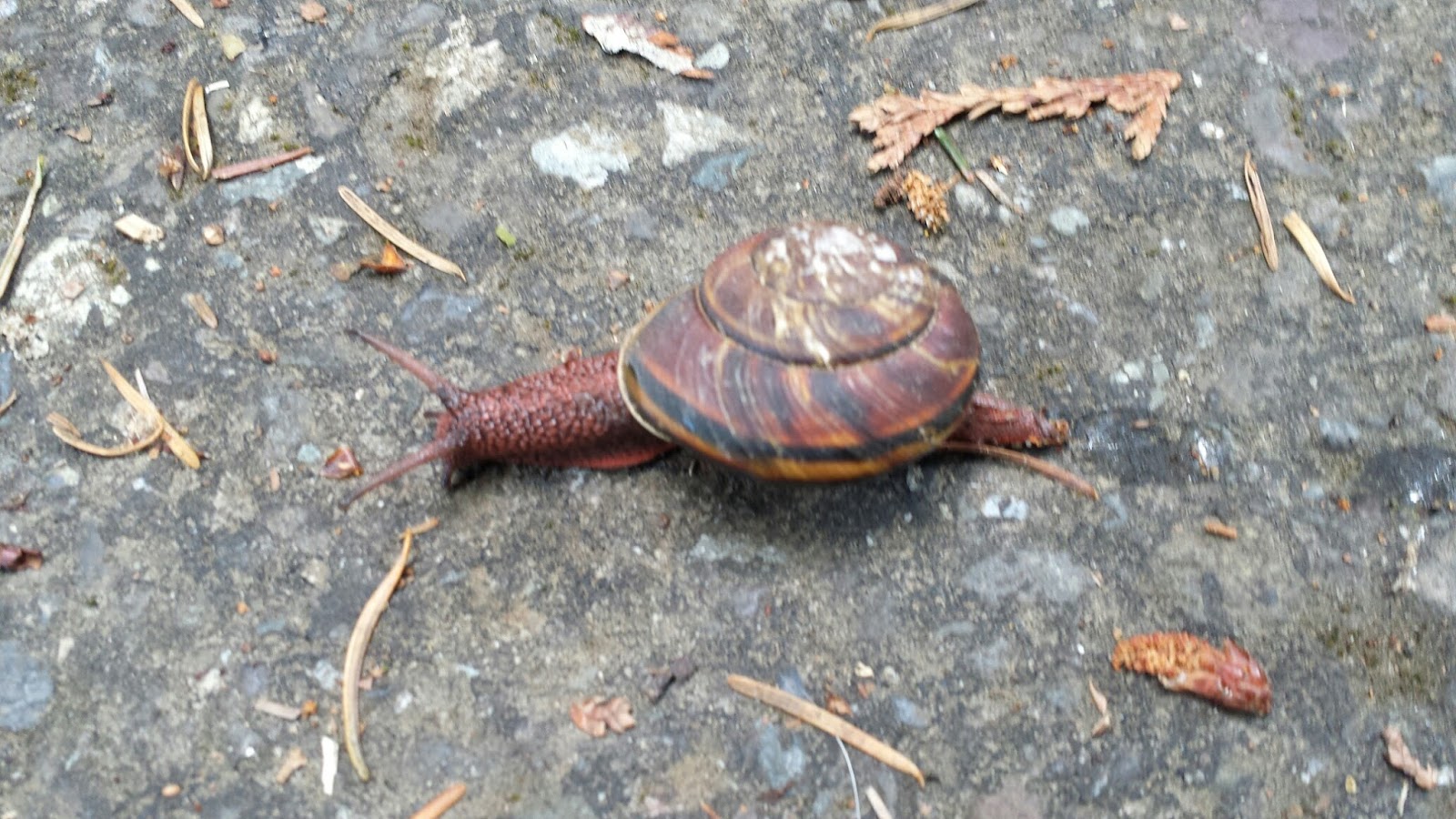
Land Snail
RIALTO BEACH
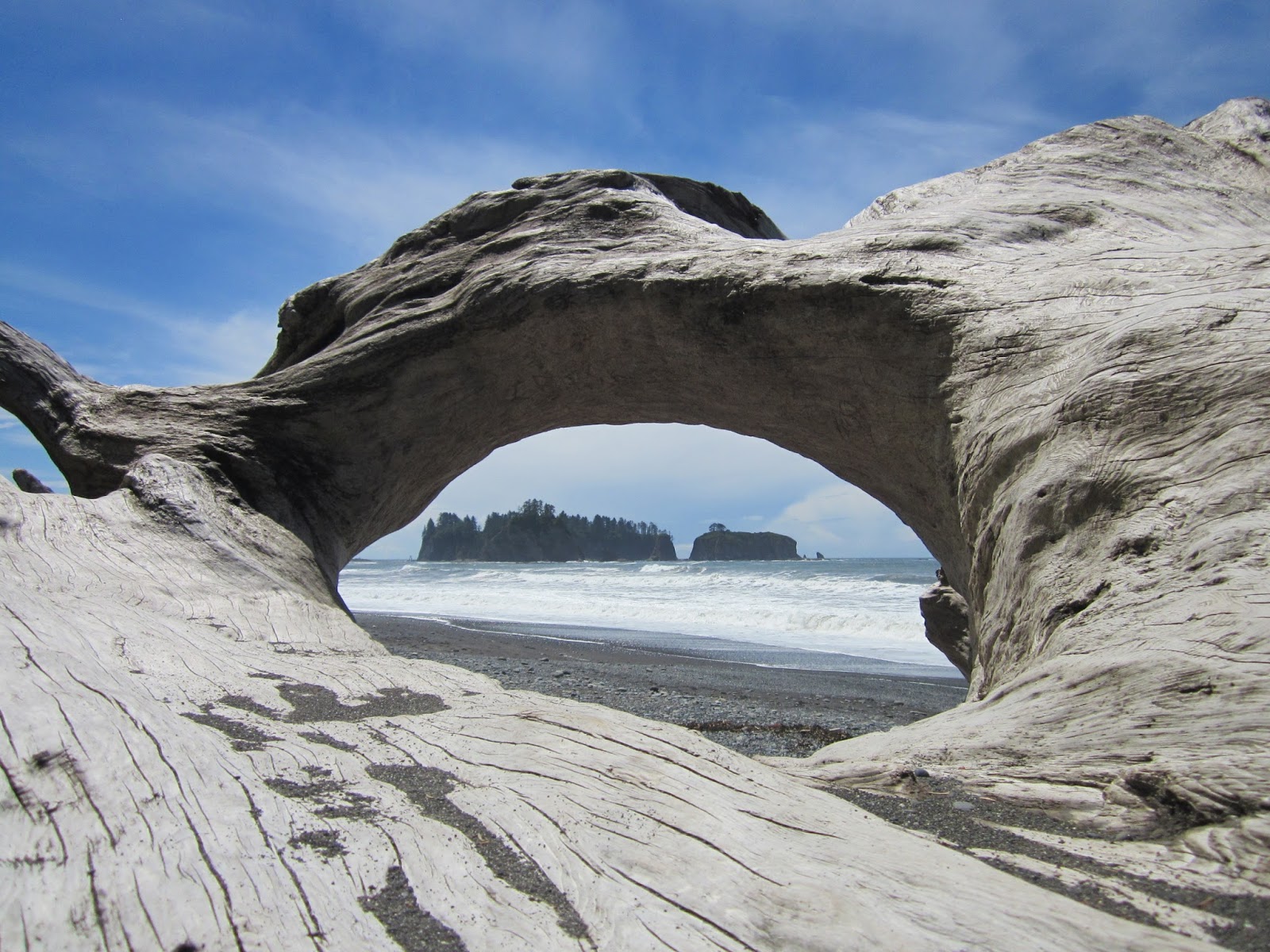
After our logging tour we drove west to the coast for a picnic lunch and walk on the scenic Rialto Beach. Rialto Beach is a part of the Olympic National Park and is adjacent to the Quileute Indian village of LaPush.

Driftwood is plentiful.


Hole-In-The-Wall
EXPLORING THE NORTHWEST COAST 
Friday we took the Washington 112, Strait of Juan de Fuca Highway and the Cape Flattery Tribal Scenic Byway to Cape Flattery. Cape Flattery is the farthest north and farthest west point in the continental United States. The Cape is on Makah tribal lands so we were required to purchase a recreation pass in Neah Bay Indian village in order to access the hike to the Cape. Eight miles beyond Neah Bay is the trail head for the spectacular .7 mile hike to Cape Flattery.
Sail and Seal Rocks
on the Strait of Juan de Fuca
The first of four observation decks at the Cape.
Standing on the most northwestern point in the
lower 48.
Tatoosh Island and lighthouse and
Vancouver Island are easily spotted from here.
Tatoosh Island and Lighthouse


Thursday, June 9, 2016

What do Hoh, Quinault and Queets Have In Common?

Hoh, Quinault and Queets are all temperate Rain Forests in the Olympic National Park. We spent three days exploring and hiking in these remote and unusual micro-ecosystems.
The Park protects the largest old-growth forest in
the Pacific Northwest.
Huge trees, ferns and moss create an abundant
biomass supported by 140+ inches of precipitation annually.
Not one surface of the forest is left bare.
The moss creates an eerie out-of-this-world effect.

Due west of Hoh Rain Forest is the beautiful Ruby Beach.
This Pacific coast beach is a unit of the Olympic National Park.

Kalaloch (Clay-lock) National Park Lodge
overlooks the Pacific coast, south of Ruby Beach,
was a great (only available) stop for dinner.

Odd Spruce Burls at the Beach 1 Trail South of Kalaloch

On another day we explored the Quinault Rain Forest, also known as the Valley of the Giants. Quinault contains six record setting size trees, Sitka Spruce, Douglas Fir, Western Red Cedar, Yellow Cedar, Western Hemlock and Mountain Hemlock.
What is Virginia taking a picture of?
The World's Largest Douglas Fir
40'10" circumference, 302' tall
Quinault Nature Loop Trail
Picnic Lunch on the Shore of Lake Quinault
We saw these iridescent clouds, clouds with
rainbow colors, on the south shore of Lake Quinault.
This happens when especially tiny water droplets or
small ice crystals individually scatter light.
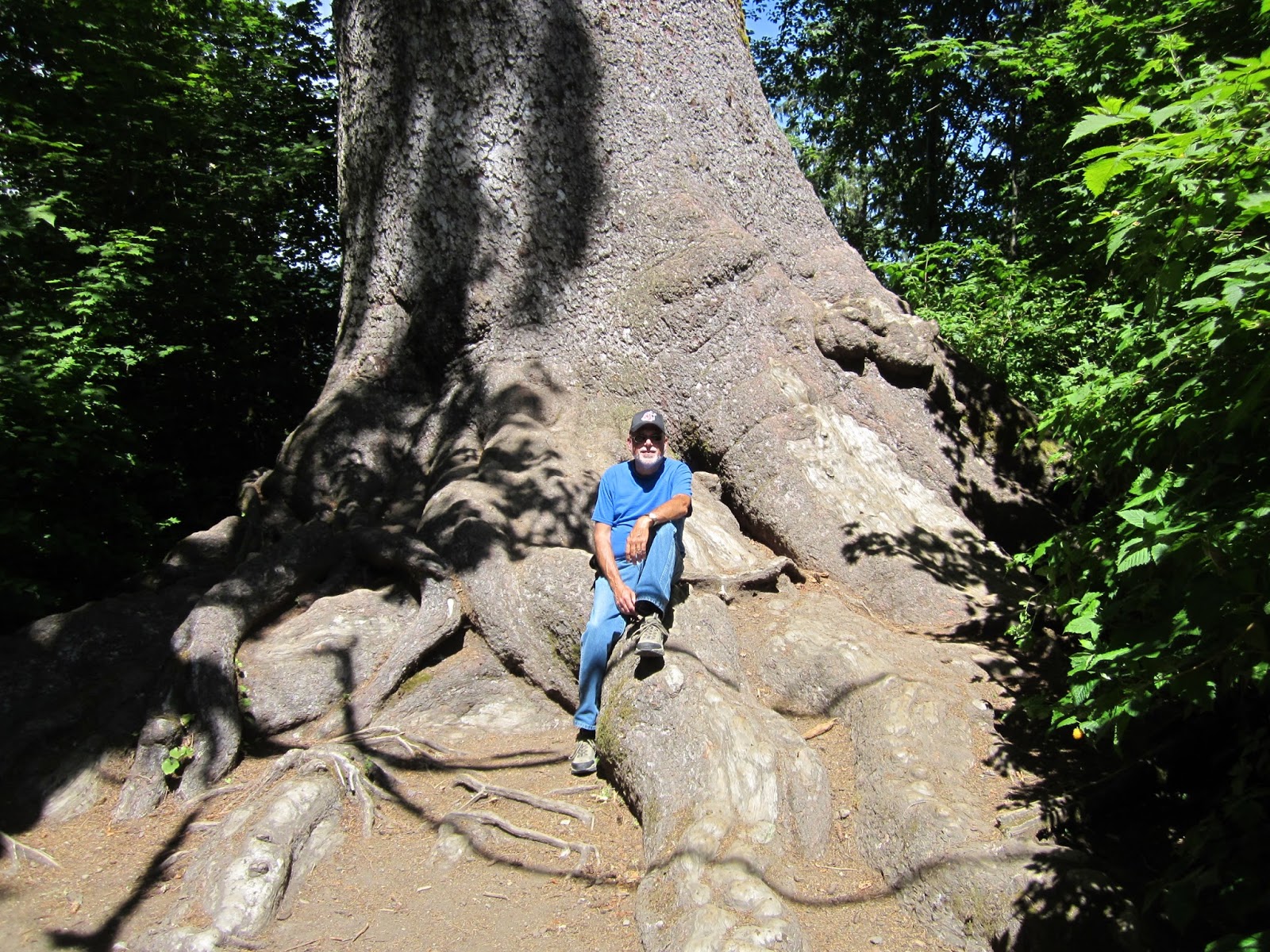
The World's Largest Sitka Spruce
59' circumference, 191' tall
This tree is over 1,000 years old.
On the north shore of Lake Quinault is the trail to the
1889 Kestner Homestead.
We enjoyed some salmon berries along the trail.
These were in season and growing along most trails
in the rain forest.
Largest Western Red Cedar in the World
63'5" circumference, 174' tall
The center is hollow enough to hold a party.

It's a little scary when it creaks in the wind.


Grays Harbor - Our First Stop on the Olympic Peninsula

We have a beautiful and quiet site at Hoquiam River RV Park, on the Hoquiam River and Grays Harbor. Our windows face this tranquil river scene. Since we are located very near the Pacific Ocean we watch the water level of the river fluctuate up to ten feet each day. As the ocean tides come in and go out the river actually flows both directions.
Deck at Hoquiam River RV Park
Beautiful, but invasive, Foxgloves grow in
all the disturbed areas along the roads.
The weather has been unseasonably warm and dry. Taking advantage of this we headed south on this segment of our peninsula tour. Starting at Bottle Beach State Park and then continuing along the coast to Westport and on to Tokeland, we completed a small circle tour returning to Hoquiam.
First glimpse of the Olympic Mountains from
Bottle Beach State Park.
Spotted our first bald eagle of the trip.
Grays Harbor at Westport had plenty of boats
and plenty of harbor seals.
Grays Harbor Light House,
the tallest in the state
 At Furford Cranberry Museum, we learned everything
we ever wanted to know about cranberries.
The many cranberry fields that grow in the Grays Harbor
area were in their spring bloom.
The Tokeland Hotel and Restaurant was our stop
for a late lunch.
This 1889 hotel is the oldest still operating
 in Washington state.
 

Thursday, June 2, 2016

Washington's Majestic Mountains

Memorial Day we drove south from Castle Rock to visit the Ridgefield National Wildlife Refuge. This refuge sits along the Columbia River about 12 miles north of the city of Vancouver, Washington. This refuge has a 4.2 mile auto tour loop along with two 2-mile wetland hiking trails. The tree swallows and bull frogs were busy on this beautifully sunny day. The refuge is also part of the Lewis & Clark National Historic Trail. There is a Cathlapotle Plankhouse which was constructed to resemble the houses described by Lewis and Clark when they visited the Indian village more than 200 years ago.
Ridgefield NWR
Cathlapotle Plankhouse
After a picnic lunch at the Refuge we decided to revisit Mount St. Helens National Volcanic Monument. Although we were here for a day in 2013, since our RV resort was just across from the entrance road, we couldn't resist going back up the 52 mile drive.
The vegetation is recovering after
the May 18, 1980 eruption.
View from the Johnston Ridge Observatory
Mount Rainier, at nearly three miles in height, is the tallest peak in the Cascade Range and is one of the world's most massive volcanoes. We spent two days touring Mount Rainier National Park. The first day we approached the volcano from the west via the Nisqually entrance and drove to the Paradise Inn and the visitor center at 5240 feet. On our second visit we entered the park from the east at the Stevens Canyon entrance and drove to Paradise. The Stevens Canyon Road was opened just days before due to snow. We also drove along the east park boundary to the White River Entrance and drove as far as we could before we reached the road to Sunrise which was still closed due to snow. I guess we may have to return in July.
Christine Falls
Henry M. Jackson Memorial Visitor Center
Paradise Inn
Reflection Lake
Falls Creek Falls
East Side of Mount Rainier
from Cayuse Pass