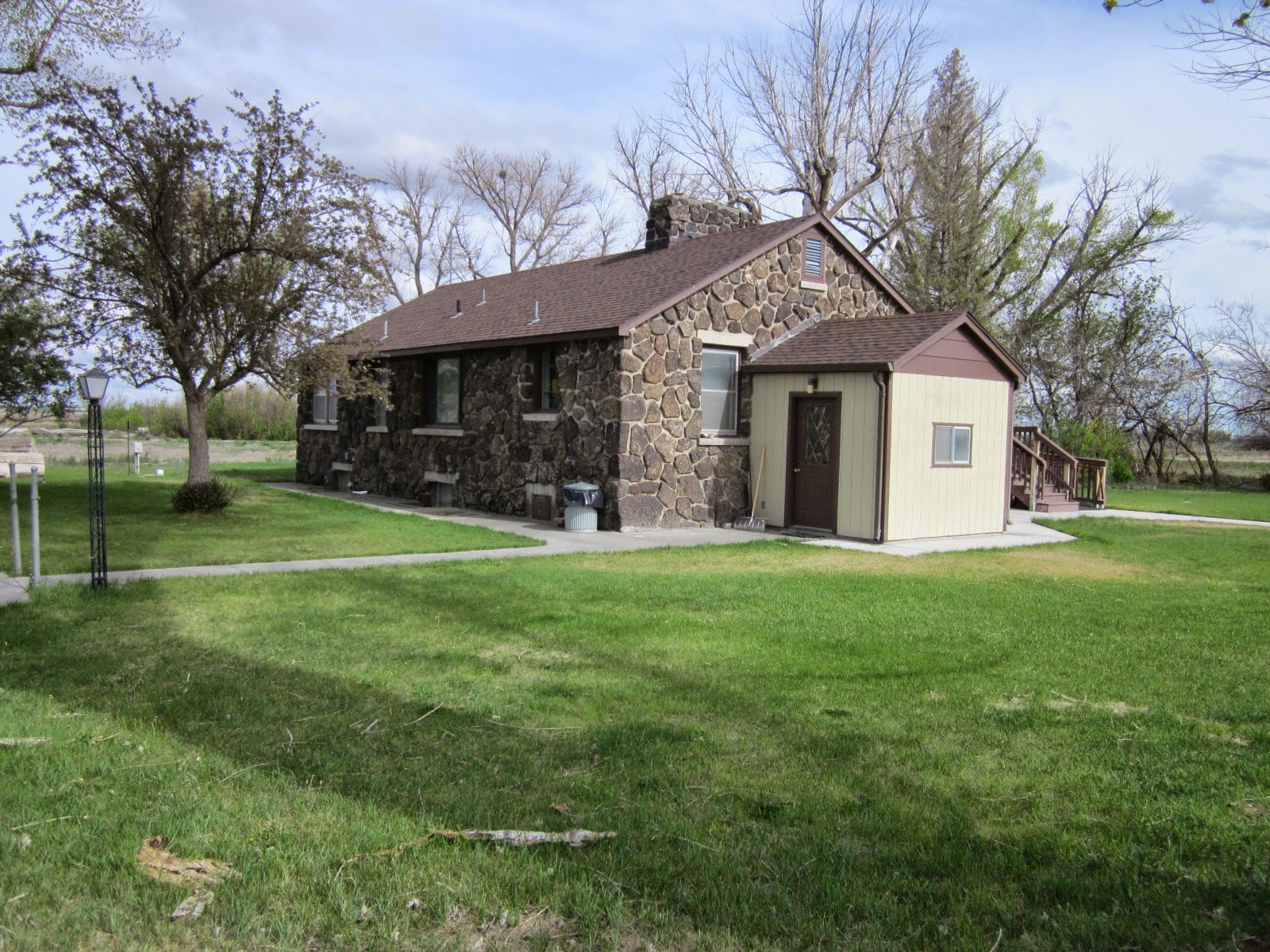
Our Home

Our Home

Wednesday, June 24, 2015

Circle Tour - To Twin Falls, Sun Valley, Stanley & Challis


Home Sweet Home
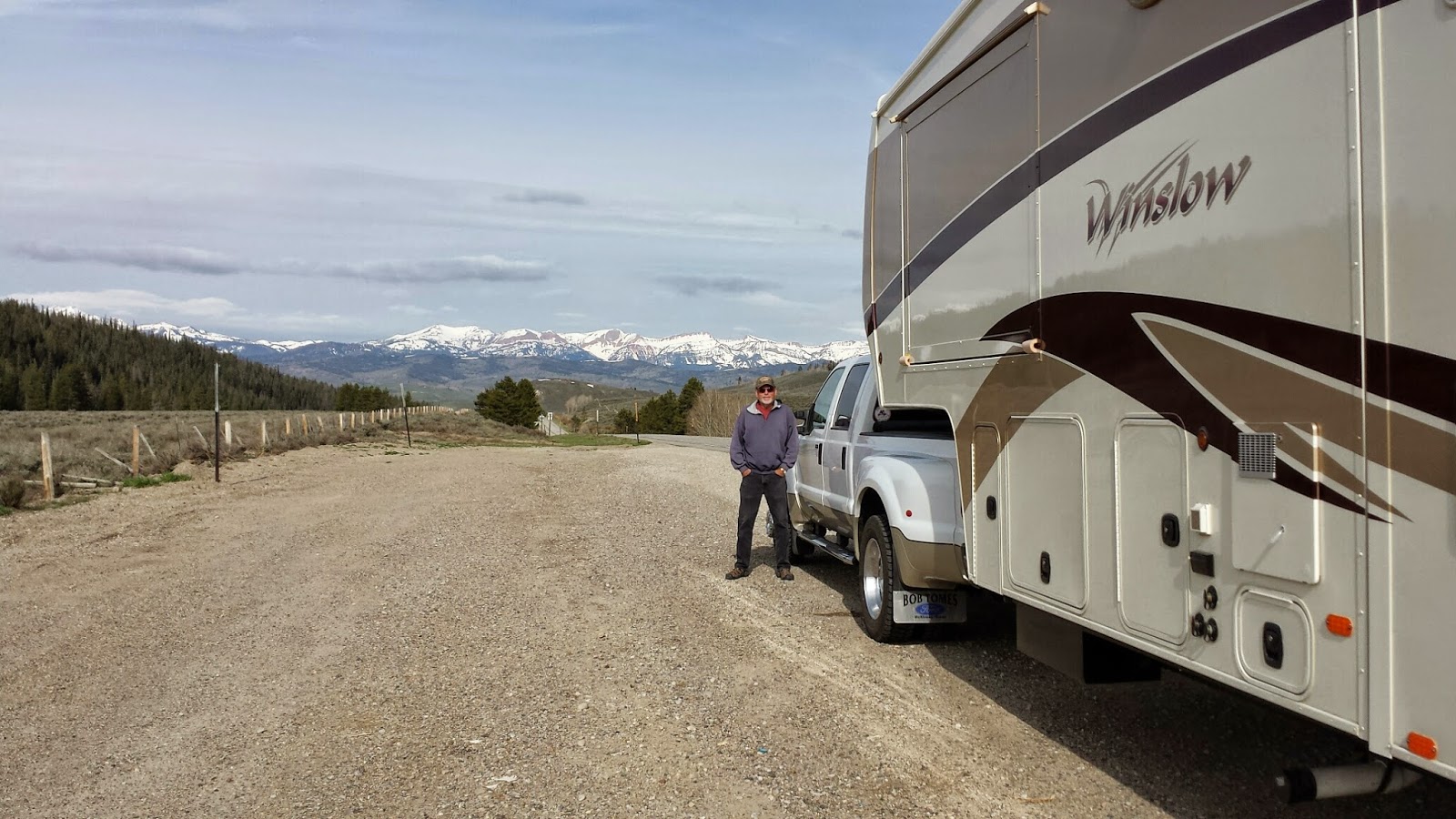
It's really nice having a roof over our 5'er.
 
We took a two day, overnight, circle trip, Thursday (6/11) and Friday. First we headed southwest to the Twin Falls area. Friday we continued north through Sun Valley and into the Sawtooth Recreation Area and the mountain town of Stanley before turning back toward home through the Lost River Valley and right past Idaho's tallest Peak, Mt. Borah (el. 12,662).
 
Our first stop was a picnic lunch at Malad Gorge State Park. People pass by on the Interstate in a blink of an eye never suspecting this 250 foot deep gorge close by.
Our next stop was at Hagerman Fossil Beds National Monument. The major attraction here is the remains of over 200 species of plants and animals that have been found in the park, including complete skeletons of the Hagerman Horse, a zebra-like ancestor of today's horse. There are also deep wagon ruts left behind from the Oregon and Emigrant Wagon Trails.


Driving Highway US 30 East
Traveling the Niagara Springs State Park Trail,
where a thousand falls flow out of the cliff face.

Delicious homemade ice cream at the Clover Leaf
Creamery in Buhl, Idaho.
The Perrine Bridge at Twin Falls, Idaho, is a truss arch four-lane bridge that carries US 93 over the Snake River Canyon. Perrine Bridge is 1,500 long and 486 feet above the Snake River. The bridge is a popular, and legal, BASE jumping site. We watched a number of jumpers dive over the edge. This section of the Snake River is also famous for the dirt ramp, still visible, where Evil Knievil unsuccessfully attempted to jump the Snake River in 1974. While in Twin Falls we also visited the Shoshone Falls and the Twin Falls, for which the town was named.


The Beautiful Town of Sun Valley

Sawtooth Scenic Route

Frank Church Scenic Overlook
near Galena Peak

Redfish Lake, south of Stanley

Salmon River Gorge at Sunbeam Hot Springs
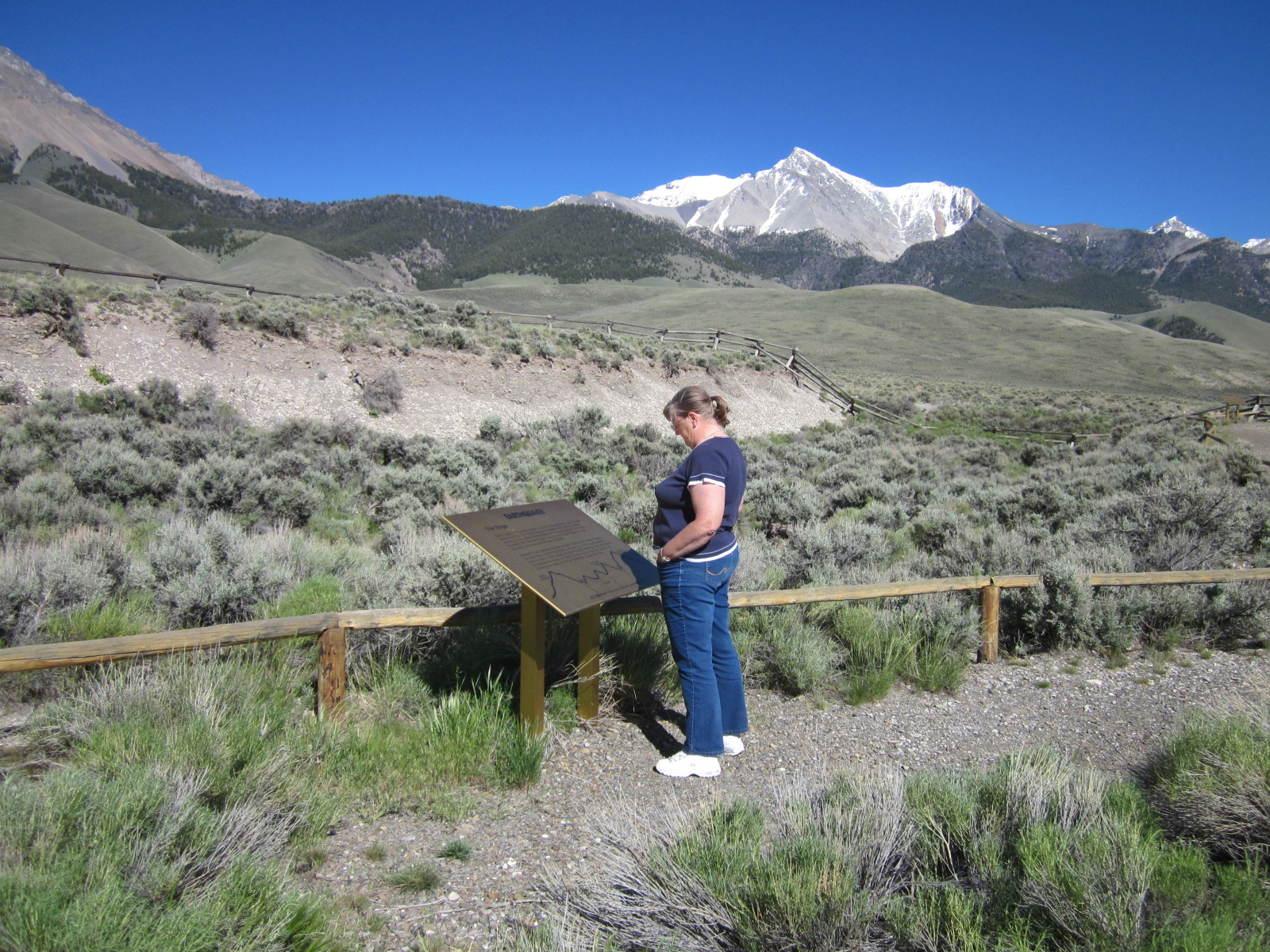
Our last stop was unplanned but very interesting. In October, 1983, a 7.3 earthquake formed a 21 mile long scarp near the base of Borah Peak. The movement of the rupture was up and down and is called a "high angle dip slip fault." This is clearly visible in the foreground of the picture with snow covered Borah Peak in the background. This earthquake dropped the valley 7 1/2 feet, raised the mountain over a foot and caused new springs and craters to develop. More than 400 billion gallons of water gushed from the ground. The quake did over $15,000,000 of damage to roads and the surrounding towns.

Thursday, June 4, 2015

Craters of the Moon National Monument

Less than a 100 mile drive from Camas NWR lies the 750,000 acre national monument called Craters of the Moon. It received its name at the beginning of the 20th century when locals referred to the area as "craters of the moon." We now know better, as this was before Neil took his first step on the lunar surface.
There is a seven mile loop road that provides access to hiking trails, lava tube caves and viewpoints. The most recent eruption occurred a mere 2,000 years ago, and geologists believe that future events are likely.
The park was fully adorned in wildflowers during
our late May visit.

A short but steep 1/2 mile trail leads to the
top of Inferno Cone
From here you can see the cinder cones lined
up along the Great Rift and a great 360° view.
Indian Tunnel Lava Tube

Saturday, May 23, 2015

Yellowstone NP Before the Rush

After our first full week here, we took a three day weekend trip to Yellowstone National Park. West Yellowstone, Montana, is about 110 miles northeast of Camas NWR.
On our way to the Park, we followed the Mesa Falls Scenic Bypass (SH-47) that parallels US 20.  

Upper Mesa Falls
Geysers Everywhere
Mammoth Hot Springs 
Home for Two Nights in Mammoth Hot Springs Village
Church Volunteers Tending the Lawn
Grand Prismatic Spring
Old Faithful Inn
Where we Enjoyed Lunch Each Day
It was very nice and reasonably priced.
Crested Pool in Upper Geyser Basin
There She Blows
Old Faithful
Erupts Approximately Every 90 Minutes
Yellowstone Canyon
and the Lower Falls
We did see three black bears, a cub and one grizzly.
We only got a good picture of this one.
The last morning we awoke to seven inches of fresh snow.
What a treat to see the Park in its winter coat.
Who would have thought a snowball fight in mid-May.
We enjoyed watching them melt in the hot pools.
Norris Geyser Basin trails were beautiful but not busy.

Wednesday, May 13, 2015

First Work Week at Camas

Well, we made it through the first week. As always the first week is challenging as we settle in and orient ourselves to both the area and the refuge. All refuges are similar yet each is unique. 
 
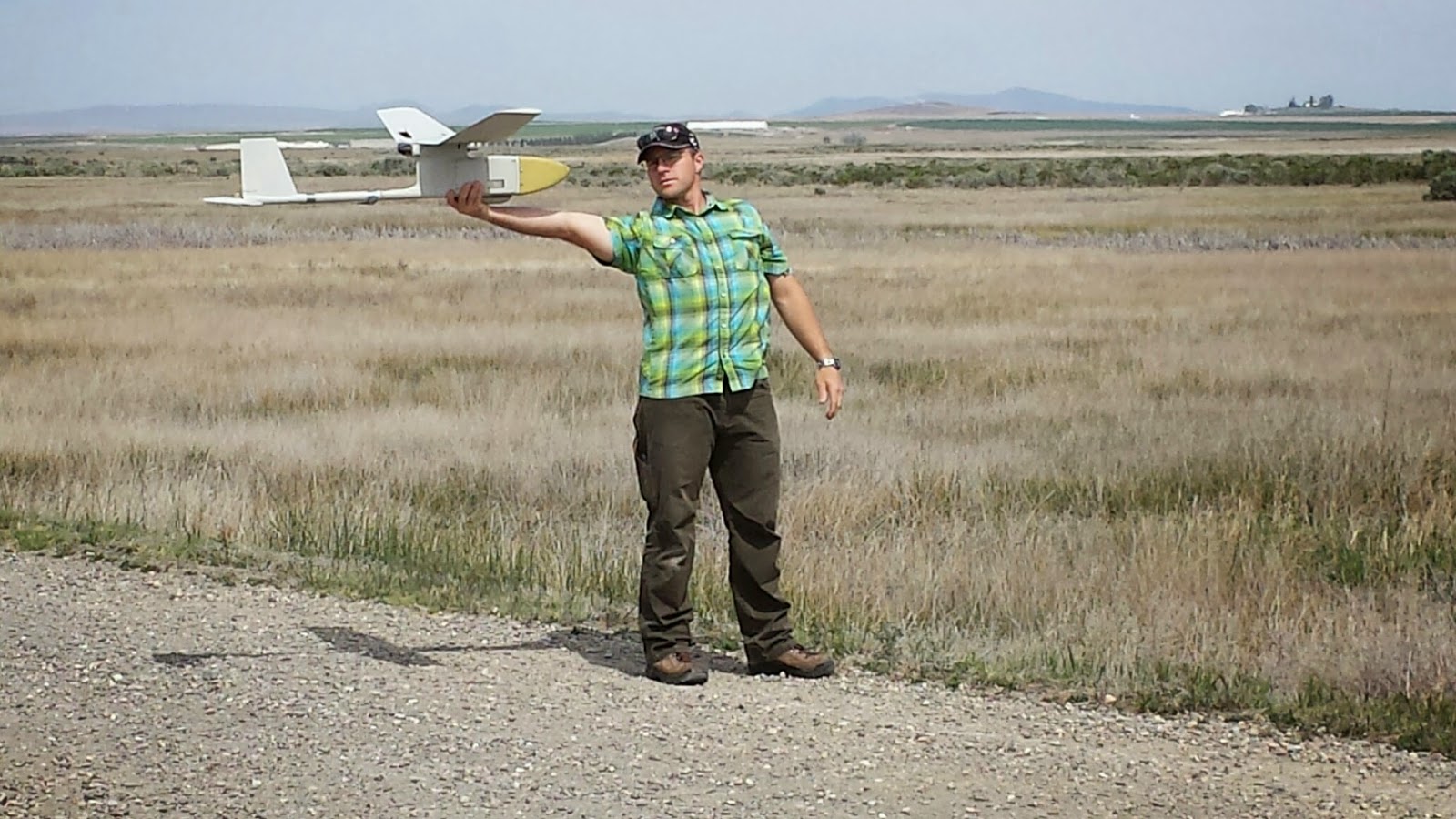
Monday USGS came out to assess the effectiveness of drone surveys versus fixed wing aircraft surveys of Trumpeter Swan nesting. This is the first time a drone has been flown on the refuge. They assembled the army surplus drone and tested it by flying quadrants  for about three hours. We were invited to observe the test.
 
Drone Assembly
Launch
Flight Operations
Each Tuesday we follow a specific route through the many miles of refuge two-track roads surveying large mammals and certain birds of interest as well as any newborns. This is also a good time to check on two Bat Monitor stations, changing the batteries and flash cards that record the bat echoes. 
 
Tuesday and Wednesday afternoons we are responsible for setting 45 small mammal traps. These traps are laid out in grids of nine each. The five 100 foot square grids are placed in areas of the refuge as determined by the biologist. These grids are moved each week. Wednesday and Thursday mornings a group of local volunteers come to open each trap, identify the small mammal captured, record data gathered, mark them with White-Out, and release them.
 
Daily we read gages and record water levels in the ponds, which are maintained by ground water pumps.
 
Female Elk has Seen Better Days
Small Mammal Survey Results
Checking Pond Levels
Sawtooth Mountain Range in the Background
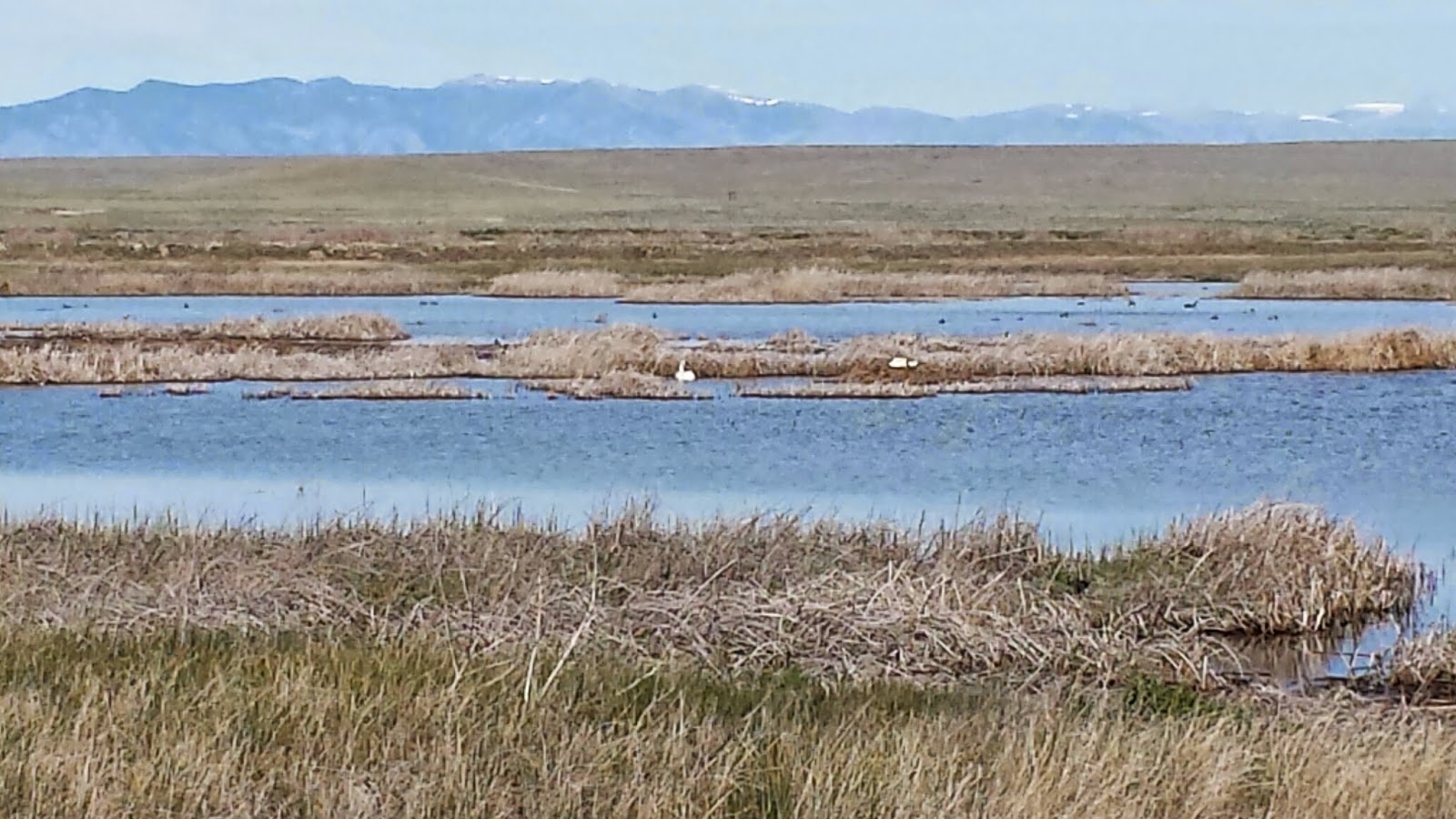
Nesting Trumpeter Swan Pair

Saturday, May 9, 2015

Arrival at Camas NWR in Idaho

During the last half of our journey from Nebraska to Idaho we followed Interstate 80 west through most of Wyoming. We turned north at Rock Springs, Wyoming, and followed a scenic shortcut through the mountains, bypassing Salt Lake City, to enter Idaho. Since leaving the Rio Grande Valley, we have traveled around 2300 miles to our Summer home.
Rain clouds forming on Elk Mountain, west of Laramie.
Thankfully we were always a day ahead of the storms.
First good view of the Teton Range
from US 191 north of Pinedale, WY.

Arriving at this high desert refuge shortly after lunch on May 6, the friendly refuge maintenance man was waiting on the drive to show us where to park and help with any problems. After getting settled we met with the manager and biologist, the other two members of this staff of three. The biologist, Pam, was a familiar face since we worked with her in the summer of 2011 at Arapho NWR.

They took us out into the field to show us how to set the small mammal traps for the mouse and vole survey that is being conducted. We are also training for bat activity tracking, gathering water depth data from the ponds and water flow readings from the six wells that maintain the wetlands. We will also be responsible for a weekly elk survey in which we drive specific roads through the refuge looking for changes in wildlife and counting the elk, nesting trumpeter swan, mule and white-tail deer, sage grouse, long-billed curlew, prong-horn antelope, American white pelicans and any young ones that may have arrived. There are a large variety of waterfowl on the refuge. Also, close to our trailer is a bald eagle nest and two families of great horned owls, which look very cute in their downy coats.


Our covered RV pad is big enough to house our
truck and car.
 The Refuge area is becoming more arid as the aquifer
levels decline due to over use by farming.
Old cottonwood trees are dying off without replacement.
The refuge office is one of several 1930's era buildings
in this complex. The shop building also contains a
laundry room, shower and bathroom.

Saturday, May 2, 2015

On Our Way to Idaho

We stopped at Army Corp. of Engineer (ACE) campgrounds in Kansas and Nebraska. Cottonwood Point ACE Campground is on the Marion Reservoir southeast of Salina, Kansas. 

Cottonwood Point Campground was a great two night stop.
Our site #102 was in the newest section complete with
50 amp service and a sewer connection. 
Goessel, Kansas, near Marion Reservoir, is in the heart of Mennonite country. We spent the afternoon touring the Mennonite Heritage and Agricultural Museum. Eight buildings in a village-like setting tell the story of Mennonites who emigrated from the plains of Ukraine to the plains of south central Kansas in 1874 and helped turn Kansas into the breadbasket of the world.

After visiting the museum we went to the Bread Basket German Restaurant in Newton, KS. They provided eight different kinds of homemade soup and a fresh salad bar with various homemade breads.

Hunter Cove ACE Campground is on Harlan County Lake near Alma, Nebraska. Upon arrival we discovered only seven of their sites had fresh water connections and we took the last available. The next day we drove around the lake and found Methodist Cove ACE Campground which has easy access FHU sites and was only five miles from US 183. This will be where we stop the next time. With our Senior Pass discount it's worth it to drive a couple miles out of the way.

Wednesday, April 1, 2015

Blast Off to Idaho!

After completing six months of volunteer work in South Texas we are getting our 5'er ready to start the trip north. Despite far above average rainfall for the winter season, we still got a lot of work done on the Refuge tracts by adapting our work days to mesh with the sunshine. Mainly, we repaired a lot of barbed wire fence and pole sawed many miles of overgrown four wheel drive roads. Of course, we also patrolled the many LRGV properties picking up trash and tires, replacing and posting new boundary signs, and reporting any other problems we didn't have time to fix. This was our sixth and longest stay here. We really enjoy what we do here, but we are ready for some new scenery and a little cooler weather.
We plan to stop in Austin and Dallas before we leave Texas at the end of April to move to our next volunteer job at Camas National Wildlife Refuge in southeastern Idaho.
We started using "Dri Wash 'n Guard" to clean/protect our new rig.
We spent the day using this waterless car wash product.
The ION version is best for clear coat applications.
We really like this product.